Upfront ROI represents the one-off capital expenditure saving from buying and installing fewer lockers over the life of the lease.
As a rule of thumb, you need 30% fewer lockers when you go with smart technology, instead of traditional lockers, because utilisation is higher and you do not need 1 locker per one employee.
We calculate the savings as 40 * A * growthFactor, where
while, “40” bundles together the average purchase + installation cost savings per one locker with consideration of 30% fewer lockers needed per number of employees.
Ongoing ROI represents the yearly savings you get from using smart lockers instead of traditional lockers over time. These savings come from two main areas:
1. Space and rent savings
Smart lockers mean you need about 30% fewer lockers.
Fewer lockers = less floor space used → lower rent costs.
Each locker takes 0.0625 m², so we calculate how much floor space is saved, then multiply that by your annual rent per m².
2. Management time savings
Managing lockers takes time (think forgotten or lost keys, time managing replacement, issuing and collecting keys when on-boarding and off-boarding employees, responding to employee requests...).
With smart locker system in place, your facilities or workplace manager spends close-to-zero timel on administration, which translates into cost savings based on their salary.
We also factor in how your company grows over time using a growth factor, so the savings reflect your future headcount over the remaining lease period.
Typically, you save 30%—50% of lockers and the floor space they take up — which can be reused for desks, collaboration areas, loung spaces or removed from your rent altogether.
In the calculator, we're conservative and take 30% into consideration.
For 1,000 employees, that means 700 lockers instead of 1,000.
Each locker takes 0.0625 m², so we calculate how much floor space is saved. Plus, for ongoing savings, we also then also multiply that by your annual rent per sqm/sq ft.
Traditional (non-smart) lockers might seem simple, but they create hidden costs that add up every year.
1. Too many lockers, not enough usage
Traditional lockers are usually one per person, even if people aren’t in the office every day. That means you’re paying for lockers — and the space they take up — that often sit unused.
2. Limited functionality
They’re single-purpose. You can’t easily use them for parcels, IT equipment, or handovers. This leads to extra steps, interruptions, and even meetings just to exchange items.
3. Manual processes slow everything down
Everything is done manually — assigning lockers, handling keys, onboarding new employees. It’s slow, inefficient, and requires someone to be physically present.
4. No visibility = wasted space
When lockers are assigned but not used, there’s no visibility into who’s using what or for how long, which leads to locker blocking and wasted space.
5. Higher risk of loss and issues
Without tracking or audit trails, problems like lost keys, missing equipment, or misuse happen more often — and are harder to fix.
6. No remote control or data
Admins can’t manage lockers remotely or see usage trends. That means more manual checks and less control.
7. High admin workload
All of this adds up to a lot of work: managing keys, and spreadsheets,issuing and collecting keys when on-boarding and off-boarding, responding to employee requests...
👉 This results in higher operational costs over time.
In simple terms
Traditional lockers cost more because they’re underused, manual, and inflexible — leading to wasted space, lost productivity, and more admin work. Learn more.
CO₂ savings represent the reduction in emissions from needing fewer lockers.
When you switch to smart lockers, you use typically about 30% fewer lockers. That means fewer materials, less production, and lower overall environmental impact.
How we calculate it
We then convert the number of lockers saved into CO₂ savings using an estimate: 1 locker ≈ 125 kg of CO₂
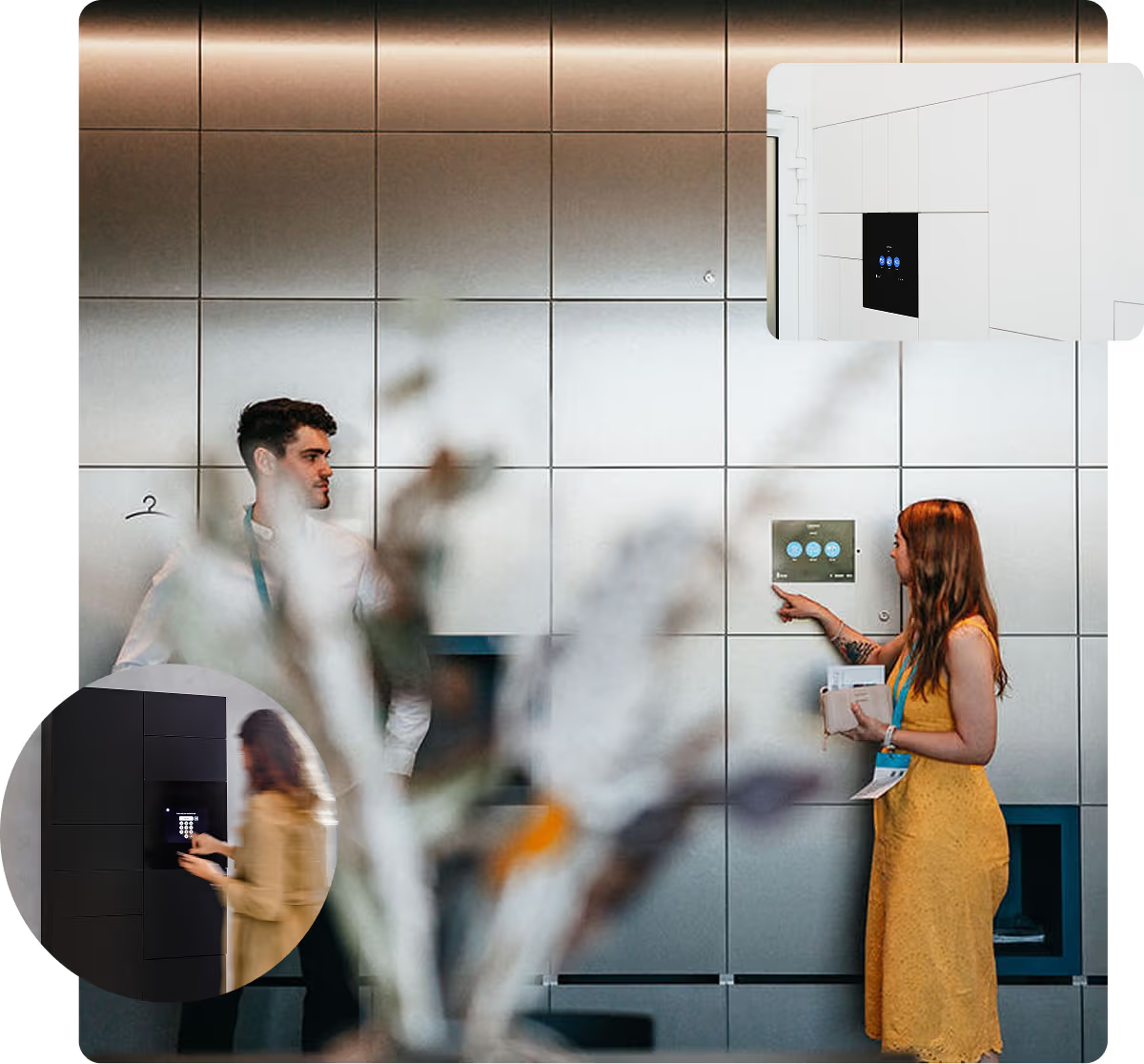
Stop juggling keys, deliveries, and paperwork. Blocks gives you a modular smart-locker system that adapts as your needs change — for storage, parcels, asset management, and more. Book a demo to see how easy it is to save time, space, and streamline operations.
Want to reach us directly?
Call the phone number below.
