Upfront ROI represents the one-off capital expenditure saving from buying and installing fewer lockers over the life of the lease.
Upfront ROI represents the one-off capital expenditure saving from buying and installing fewer lockers over the life of the lease.
As a rule of thumb, you need 30% fewer lockers when you go with smart technology, instead of traditional lockers, because utilisation is higher and you do not need 1 locker per one employee.
We calculate the savings as 40 * A * growthFactor, where
while, “40” bundles together the average purchase + installation cost savings per one locker with consideration of 30% fewer lockers needed per number of employees.
Upfront ROI represents the one-off capital expenditure saving from buying and installing fewer lockers over the life of the lease.
Upfront ROI represents the one-off capital expenditure saving from buying and installing fewer lockers over the life of the lease.
As a rule of thumb, you need 30% fewer lockers when you go with smart technology, instead of traditional lockers, because utilisation is higher and you do not need 1 locker per one employee.
We calculate the savings as 40 * A * growthFactor, where
while, “40” bundles together the average purchase + installation cost savings per one locker with consideration of 30% fewer lockers needed per number of employees.
Upfront ROI represents the one-off capital expenditure saving from buying and installing fewer lockers over the life of the lease.
Upfront ROI represents the one-off capital expenditure saving from buying and installing fewer lockers over the life of the lease.
As a rule of thumb, you need 30% fewer lockers when you go with smart technology, instead of traditional lockers, because utilisation is higher and you do not need 1 locker per one employee.
We calculate the savings as 40 * A * growthFactor, where
while, “40” bundles together the average purchase + installation cost savings per one locker with consideration of 30% fewer lockers needed per number of employees.
Upfront ROI represents the one-off capital expenditure saving from buying and installing fewer lockers over the life of the lease.
Upfront ROI represents the one-off capital expenditure saving from buying and installing fewer lockers over the life of the lease.
As a rule of thumb, you need 30% fewer lockers when you go with smart technology, instead of traditional lockers, because utilisation is higher and you do not need 1 locker per one employee.
We calculate the savings as 40 * A * growthFactor, where
while, “40” bundles together the average purchase + installation cost savings per one locker with consideration of 30% fewer lockers needed per number of employees.
Upfront ROI represents the one-off capital expenditure saving from buying and installing fewer lockers over the life of the lease.
Upfront ROI represents the one-off capital expenditure saving from buying and installing fewer lockers over the life of the lease.
As a rule of thumb, you need 30% fewer lockers when you go with smart technology, instead of traditional lockers, because utilisation is higher and you do not need 1 locker per one employee.
We calculate the savings as 40 * A * growthFactor, where
while, “40” bundles together the average purchase + installation cost savings per one locker with consideration of 30% fewer lockers needed per number of employees.
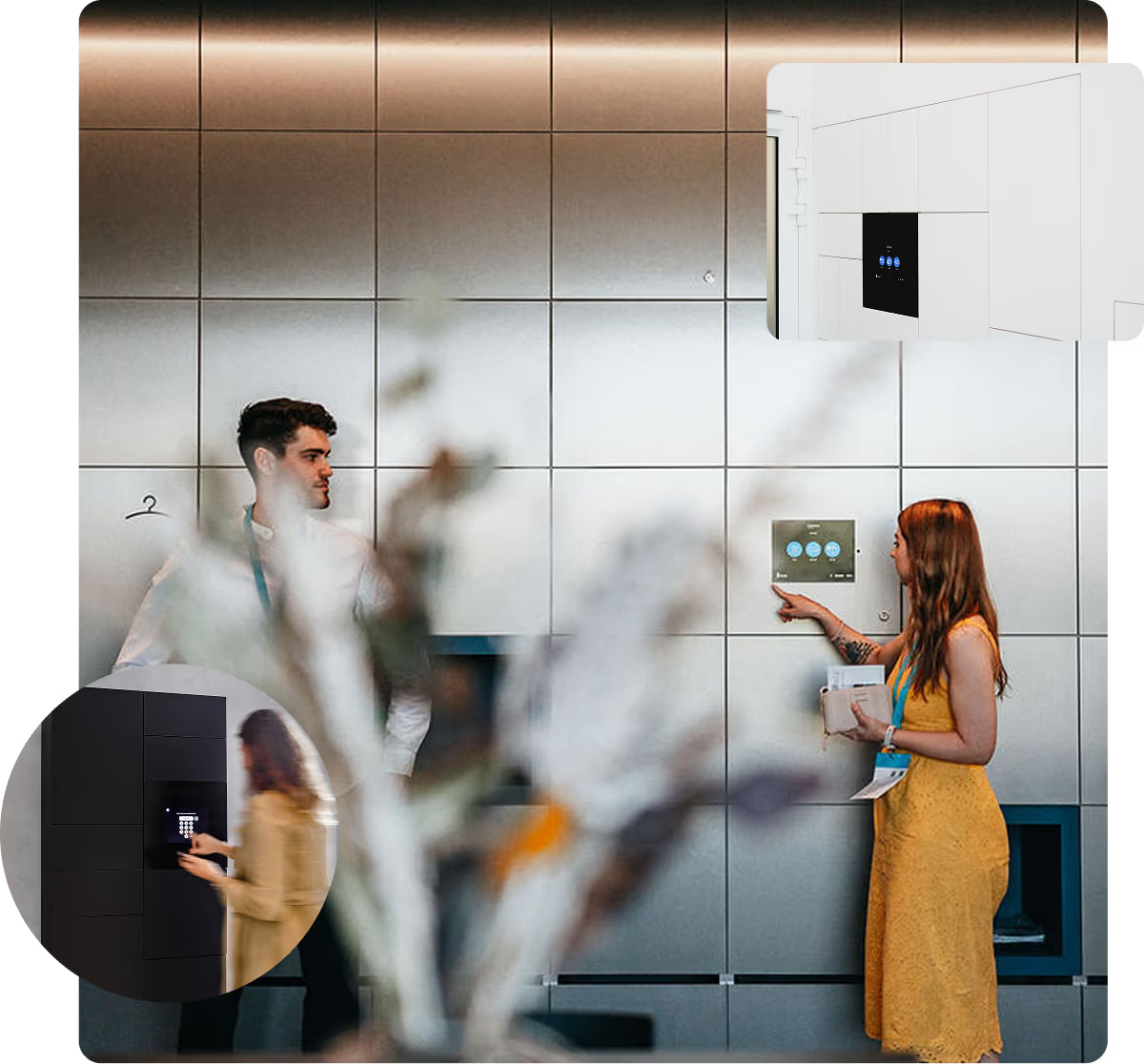
Stop juggling keys, deliveries, and paperwork. Blocks gives you a modular smart-locker system that adapts as your needs change — for storage, parcels, asset management, and more. Book a demo to see how easy it is to save time, space, and streamline operations.
Want to reach us directly?
Call the phone number below.

